
Choosing Assembly Tools with Sunrise Industrial Supplies
Sunrise Industrial Supplies Sdn Bhd supplies tightening tools, stud welding machines and safety wear for industrial customers in Malaysia. Its work extends beyond supplying a tool: the Shah Alam-based company also describes engineering design, jigs and fixtures, calibration and production support. For a team trying to make a fastening station work consistently, those connected services can make the equipment discussion more useful. Interested customers can enquire with Sunrise about the joint or production task they need to handle.
Begin with the fastening point, not the tool catalogue
A screw in a small electronic component and a bolt in a restricted assembly space call for different tools. Sunrise’s tightening range includes screwdrivers and nutrunners across different torque classes. Its electric models come in straight, angle-head and pistol forms, making both the specified torque and the physical reach important to the choice.
Battery tools can free an operator from a power cable, yet the available space around the fastener still matters. Sunrise’s cordless tightening options include compact screwdrivers and right-angle nutrunners. A straight-versus-right-angle decision should consider the joint’s torque, obstruction, grip position and reaction forces before anyone settles on a tool shape.
There is another question that is easy to miss: what must the factory record after each tightening cycle? Sunrise explains that clutch shut-off and transducerized measurement provide different kinds of control and evidence. For automotive or electronics work, that distinction can shape the station design. Sunrise also invites data center fastening enquiries for application review, without treating every sector’s requirements as interchangeable.
Smaller screws need the right kind of control
For very low-torque precision work, Sunrise lists the Danikor TTA at 0.14–0.7 Nm. Its closed-loop torque and angle tracking, with MES integration, suits a discussion about small components and traceable results. Where the station needs cordless movement, the Danikor TBE covers 0.4–2 Nm and includes data logging.
These are part of Sunrise’s broader Danikor offering. The TTC angle nutrunner, with a published 5–20 Nm range, adds a 90-degree form for fastening positions where a straight tool may not reach comfortably, while retaining torque and angle tracking.
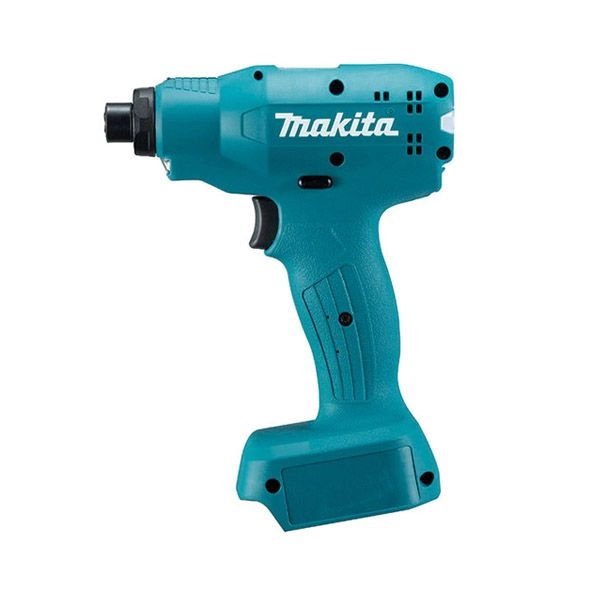
A production line may instead need a clutch screwdriver with controlled shut-off. The Makita DFT024F covers 0.5–2 Nm and combines programmable soft start with an automatic shut-off clutch. Sunrise’s Makita screwdriver range currently presents this model for precision assembly rather than implying that every Makita tool is available.
For another cordless clutch option, Sunrise’s Durofix range includes the RV2048-WR6, a 1–6 Nm programmable screwdriver. The RV2047-WR70 moves into a different task: its 20–70 Nm range and right-angle head suit a discussion about harder-to-reach industrial fastening points.
When the bolt needs a nutrunner
Sunrise’s Desoutter selection shows why “nutrunner” is not one specification. The corded EAD 50-900-EXT-150 covers 8–50 Nm, with an angle head and transducerized torque and angle shut-off. It is a different fit from a straight low-torque screwdriver, even when both appear on the same production floor.
The battery EABC-95-240-EXT-200 covers 19–95 Nm and supports wireless data logging for tightening records. At the heavy-duty end, the ERP750 covers 225–750 Nm. Matching one of these tools to a station means checking torque, access, power arrangement and the result the process needs to retain.
Sunrise can discuss bulk orders for its selected Desoutter models. Equipping several stations still takes more planning than multiplying one model by the station count: the multi-station purchasing considerations include controllers, accessories, cables, training and maintenance support for each distinct fastening task.
What happens around the tool matters too
Sunrise’s process study service considers assembly methods, tool applications and production flow. That is useful when a line has repeated fastening problems or a new joint is being introduced. A tightening process plan starts with the actual joint and acceptance criteria, then works through access, sequence, control and production release.
Automatic screwfeeding can save manual handling at a station, provided the screws and layout suit the equipment. Sunrise can discuss screwfeeding within a wider assembly solution. Before choosing a blow-feed, presenter or pickup approach, the fastener’s geometry and surface condition, as well as the tool’s access to the joint, need to be considered.
Delivering a screw is only one step. A controlled station must also decide how it recognises an acceptable tightening result and handles a failed one. Sunrise’s screwfeeding process discussion brings sequence checks, tightening measurements and data connections into that decision.
Support after the tool reaches the line
Sunrise’s calibration work focuses on accuracy and consistency for applicable precision tightening tools. For a specific nutrunner, the service-scope discussion should establish the model, working torque range and records the factory needs before a check is booked.
A tool can also need physical attention. Sunrise’s preventative maintenance covers inspection, servicing and performance checks that may reveal wear or operating problems. Its calibration and maintenance comparison helps distinguish a question about measurement accuracy from one about the tool’s condition.
If a controller and external tester show different torque numbers, neither reading should automatically be declared wrong. The reading-mismatch checks begin with the same tightening event, result definition, units and measurement setup. A different problem arises when the tool passes its check but the production joint still fails; then the fastener, seating and station conditions deserve attention.
Sunrise’s line support can help production teams examine tool performance and fastening conditions where the issue occurs. If wear or failure is involved, its spare-part and service support includes part guidance, troubleshooting and repair coordination for relevant equipment.
An existing line creates extra constraints when a nutrunner is replaced. Sunrise’s Desoutter replacement guidance considers controller and power compatibility, workstation fit, programmes and records alongside torque range. Once equipment is chosen, product training can help operators and technicians learn correct handling and basic care.
For a factory planning both new tools and their upkeep, Sunrise’s combined supply and service scope allows the purchase, calibration and maintenance requirements to be raised in one discussion. The exact arrangements can then be matched to the tool models and production needs.
Other industrial needs Sunrise covers
Sunrise’s NSW stud welding range serves structural and construction work. The mobile 18S7 supports studs up to 22 mm, while the higher-capacity 21EX7 supports sizes up to 25 mm. The stud size and site setup help determine which machine warrants an enquiry.
For workplace footwear, Sunrise carries Midori Anzen safety shoes. Both the ACF 210 and ACF 220 list 200J steel toe protection, leather uppers, dual-density PU soles and ESD resistance. Buyers can assess the appropriate model against their workplace footwear requirements.
Whether the immediate need is a single tool or a fuller assembly setup, interested customers can get in touch with Sunrise to discuss the work and ask for a quotation.