
Authentic Cantonese dim sum is shaped by more than individual dishes. Preparation, variety, timing, texture and the way different items are enjoyed together all contribute to the experience.
At Bunn Choon Restaurant in Petaling Street, Kuala Lumpur, traditional dim sum is part of a wider tea-house food experience that also includes egg tarts, congee, noodles, Chinese pastries and tea. Its dim sum is prepared in-house each day using fresh ingredients, while steamed items are placed into the steamer only after customers order.
For visitors looking for authentic Cantonese dim sum in Kuala Lumpur, these details help explain how the meal is prepared and served at Bunn Choon Restaurant.
Authentic Dim Sum Begins with How It Is Prepared
One of the clearest ways to understand dim sum is to look at what happens before the food reaches the table.
At Bunn Choon Restaurant, traditional dim sum is prepared in-house each day using fresh ingredients. Steamed dim sum is not pre-steamed in advance. Instead, steaming begins after the customer places an order.
This helps reduce problems that can happen when dim sum stays in the steamer for too long, including:
- Over-steaming
- Excessive expansion
- Changes in texture
- Changes in taste
For diners, the short wait after ordering is part of the preparation.
Bunn Choon Restaurant also shares more about this approach through its page on heritage-style handmade dim sum.
A Cantonese Dim Sum Meal Is About Variety
A traditional dim sum meal can include different textures, fillings and preparation styles instead of one main dish.
Bunn Choon Restaurant offers both steamed and fried selections, giving diners several ways to build a meal.
Steamed Dim Sum Choices
The steamed selection includes:
- Classic Siu Mai
- Majestic Shrimp Dumplings
- Steamed Fish Ball
- Phoenix Claw
- Steamed Pork Ribs
- Bean Curd Roll
- Shrimp Siu Mai
- Steamed Glutinous Rice
- Yuan Bao
- Phoenix Eye
Fried Dim Sum Choices
The fried selection includes:
- Deep-Fried Radish Cake
- Deep-Fried Taro
- Deep-Fried Shrimp Rolls
- Deep-Fried Bean Curd Roll
- Deep-Fried Salad Shrimp
- Vegetarian Spring Roll
- Fried Fish Beancurd
- Peanut Sesame Roll
For first-time diners, ordering a mixture of steamed and fried dishes is a simple way to experience different textures in one meal.
Those who are unfamiliar with the menu can also explore Bunn Choon Restaurant’s guide to dim sum for first-time visitors in Kuala Lumpur.
Classic Siew Mai Is an Easy Place to Start
Siew Mai is one of the most recognisable dishes in Bunn Choon Restaurant’s steamed dim sum selection.
The restaurant serves several variations:
- Classic Siu Mai
- Ba Ku Teh Siu Mai
- Bacon Siu Mai
- Shrimp Siu Mai
For first-time diners, Classic Siu Mai is an easy place to begin before adding other steamed or fried dishes to the table.
Visitors who want to learn more about this option can explore Bunn Choon Restaurant’s page on Hong Kong-style Siew Mai.
Steamed Fish Ball Adds a Different Texture
Not every dim sum meal needs to centre on dumplings or buns.
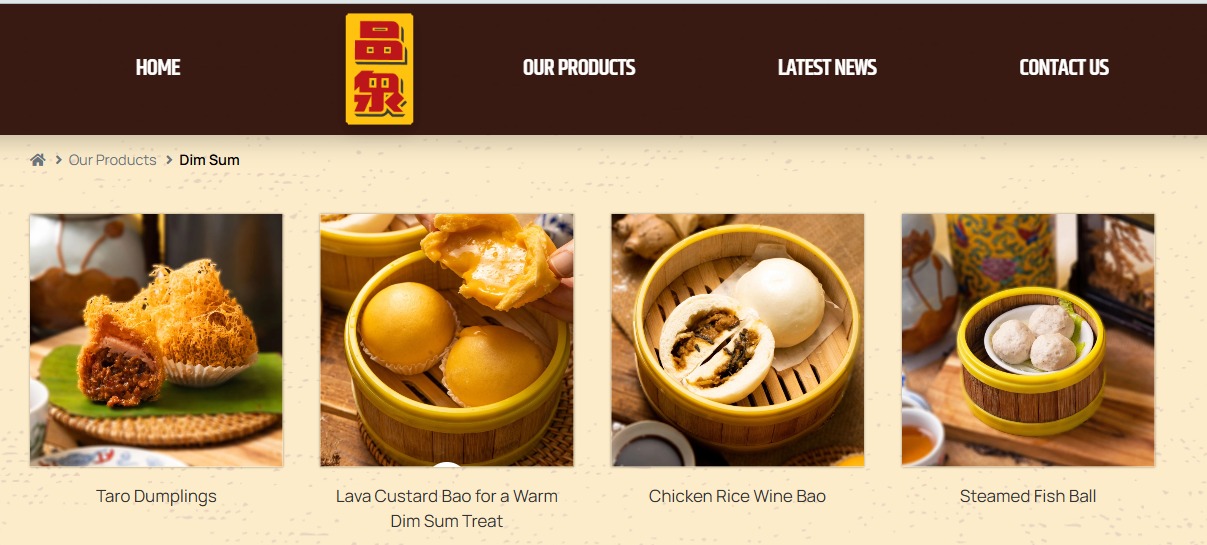
Steamed Fish Ball is another option on Bunn Choon Restaurant’s menu and adds a different texture to a shared meal. It can be paired with Siu Mai, shrimp dumplings or other steamed dishes to make the order more varied.
Visitors who want to learn more about this dish can explore Bunn Choon Restaurant’s Steamed Fish Ball page.
Chicken Rice Wine Bao Shows the Preparation in More Detail
Chicken Rice Wine Bao gives diners a closer look at how one of Bunn Choon Restaurant’s steamed dim sum items is prepared.
The preparation begins by dividing the dough into individual portions. Each portion is rolled separately, with the centre kept thicker and the edges thinner.
The chicken rice wine filling is then placed in the centre before the dough is gathered around it and sealed by hand. After shaping, the bao rests for three minutes before being steamed over high heat for eight minutes.
Like the other steamed dim sum items at Bunn Choon Restaurant, it is steamed after the customer places an order.
Visitors can learn more about the dish on Bunn Choon Restaurant’s Chicken Rice Wine Bao page.
Lava Custard Bao Adds a Sweeter Steamed Option
Dim sum does not have to be entirely savoury.
Lava Custard Bao offers a sweeter contrast to dishes such as Siu Mai, fish balls or shrimp dumplings. The soft steamed bun contains a smooth flowing custard filling and can be enjoyed as part of breakfast, tea time or a larger dim sum meal.
Visitors interested in this option can explore Bunn Choon Restaurant’s Lava Custard Bao.
Why Steaming After Ordering Matters
Steamed dim sum can be sensitive to how long it stays in the steamer.
At Bunn Choon Restaurant, steaming begins after an order is placed rather than in advance. This helps avoid over-steaming, which can affect both texture and taste.
This is especially noticeable with items such as:
- Siew Mai
- Shrimp dumplings
- Fish balls
- Bao
- Pork ribs
- Bean curd rolls
For diners, waiting a little longer for steamed items is part of receiving them at the intended stage of preparation.
What Should First-Time Diners Order?
A first dim sum meal does not need to include a large number of dishes.
A simple mixed order can introduce several styles at once.
| What to Try | Example at Bunn Choon Restaurant | What It Adds |
|---|---|---|
| Siew Mai | Classic Siu Mai | A familiar steamed starting point |
| Dumpling | Majestic Shrimp Dumplings | A steamed dumpling option |
| Fish item | Steamed Fish Ball | A different steamed texture |
| Savoury bao | Chicken Rice Wine Bao | Filled steamed dough with savoury flavour |
| Sweet bao | Lava Custard Bao | A sweeter steamed contrast |
| Fried item | Deep-Fried Taro | A crisp texture |
| Fried roll | Deep-Fried Bean Curd Roll | Another fried option |
This kind of order lets first-time diners compare dumplings, Siew Mai, bao, fish items and fried dim sum without choosing too many dishes from the same category.
Bunn Choon Restaurant’s guide to traditional dim sum in Kuala Lumpur gives visitors another way to explore the wider dim sum menu.
Dim Sum Can Be Part of a Traditional Chinese Breakfast
Dim sum works well for visitors who prefer sharing several smaller dishes instead of ordering one large breakfast.
At Bunn Choon Restaurant, dim sum can be paired with:
- Chinese tea
- Local kopi or teh
- Congee
- Noodles
- Egg tarts
- Traditional pastries
A lighter breakfast may consist of a few steamed dishes with tea. Groups can order a broader mix of steamed and fried dim sum, while visitors with a larger appetite can add congee or noodles.
Bunn Choon Restaurant opens from 7:30 am Tuesday to Sunday, making dim sum suitable for an early food stop in Chinatown Kuala Lumpur.
Visitors planning this type of meal can also explore Bunn Choon Restaurant’s guide to a traditional Chinese breakfast in Kuala Lumpur.
Bunn Choon Restaurant’s Dim Sum Is Part of a Wider Family Food Story
Bunn Choon Restaurant’s family food story dates back to 1893 and has passed through several generations.
Its earlier Petaling Street history includes a former shop at 61 Petaling Street, while Wong Kok Tong is part of the fourth generation carrying the family food tradition forward today.
The business has gone through different stages over the years rather than operating continuously from one location since 1893.
Today, Bunn Choon Restaurant operates in the Petaling Street area beside Kwai Chai Hong. Old family and business photographs displayed at the restaurant help connect the current dining experience with earlier chapters of the family food story.
The restaurant’s approach to dim sum can be seen in several practical details:
- Traditional dim sum is prepared in-house.
- It is prepared daily using fresh ingredients.
- Handmade dim sum is part of the selection.
- Steamed dim sum is steamed after ordering.
- Diners can choose from both steamed and fried items.
- Chicken Rice Wine Bao includes specific hand-preparation steps.
What Makes Cantonese Dim Sum Authentic at Bunn Choon Restaurant?
At Bunn Choon Restaurant, the character of Cantonese dim sum comes through in the way the food is prepared and served.
The restaurant combines in-house preparation, daily use of fresh ingredients, handmade items, steamed dishes cooked after ordering and a menu that includes dumplings, Siew Mai, fish balls, bao and fried dim sum.
Together with Chinese tea and other traditional tea-house foods, these details create a fuller dim sum experience for visitors exploring Petaling Street and Chinatown Kuala Lumpur.
For diners who want both traditional food and a sense of family history, Bunn Choon Restaurant brings its