
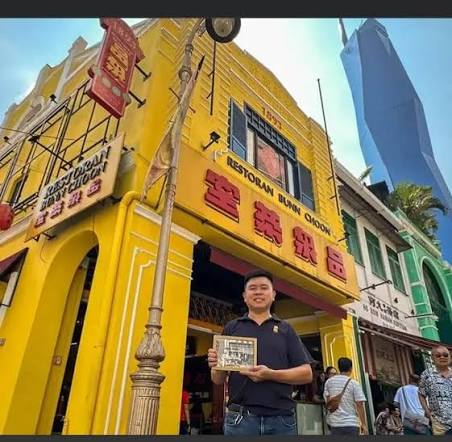
Chinatown Kuala Lumpur is a convenient place to combine traditional Chinese breakfast, heritage sightseeing and takeaway pastries in one morning. Around Petaling Street and Kwai Chai Hong, visitors can enjoy dim sum, congee, noodles, egg tarts, Chinese tea and other traditional foods without travelling far between stops.
Start with a Traditional Chinese Breakfast
Visitors can choose breakfast based on how much time they have and how filling they want the meal to be.
- Quick breakfast: Egg tart with tea, kopi or teh
- Shared meal: Steamed and fried dim sum
- Comforting option: Congee
- Fuller meal: Noodles or rice dishes
- Slower breakfast: Dim sum with Chinese tea
Bunn Choon Restaurant is one option for visitors looking for a traditional Chinese breakfast in Kuala Lumpur. Its breakfast-friendly selection includes egg tarts, dim sum, congee, noodles, Chinese tea and local drinks.
Visitors who enjoy combining breakfast with a heritage setting can also discover more about Bunn Choon as a heritage café in Kuala Lumpur.
The restaurant opens from 7:30 am Tuesday to Sunday.
Try Cantonese Dim Sum for a Shared Meal
Dim sum is suitable for visitors who prefer to order several small dishes and share them at the table.
At Bunn Choon, traditional dim sum is prepared in-house each day using fresh ingredients. Steamed dim sum is placed into the steamer only after an order is made rather than being pre-steamed in advance.
Visitors interested in authentic Cantonese dim sum in Kuala Lumpur can choose from both steamed and fried items.
Steamed options include:
- Classic Siu Mai
- Majestic Shrimp Dumplings
- Steamed Fish Ball
- Phoenix Claw
- Steamed Pork Ribs
Fried options include:
- Deep-Fried Radish Cake
- Deep-Fried Taro
- Deep-Fried Shrimp Rolls
- Deep-Fried Bean Curd Roll
- Vegetarian Spring Roll
For first-time diners, ordering a combination of steamed and fried dim sum is a simple way to experience different textures in one meal. Visitors who are unfamiliar with the menu can also explore a guide to dim sum for first-time visitors in Kuala Lumpur.
Those who prefer a more traditional local dim sum experience can read more about traditional dim sum in Kuala Lumpur, including steamed and fried selections available around the Petaling Street area.
Bunn Choon also shares more about its preparation approach through its page on heritage-style handmade dim sum.
Explore More Food Around Petaling Street
A morning around Petaling Street does not need to centre on only one dish. Visitors can choose according to their appetite, available time and preferred style of meal.
| What Visitors Want | Food to Consider |
|---|---|
| A quick snack | Egg tart or traditional pastry |
| A shared breakfast | Steamed and fried dim sum |
| A lighter meal | Century Egg & Lean Pork Congee or Chicken Scallop Congee |
| A fuller meal | Minced Pork Dry Noodles with Turnip or Homemade Rice Wine Mee Sua |
| A drink | Chinese tea, cold brew tea, kopi or teh |
| Something for later | Traditional Chinese pastries |
Visitors researching must-try food in Petaling Street can use this variety to plan a breakfast or morning food stop that suits their schedule.
Those who want to include a sit-down meal as part of their Chinatown visit can also explore a traditional restaurant in Petaling Street.
Make Time for an Egg Tart
Egg tarts are closely connected with Bunn Choon’s family story.
Wong Kok Tong, part of the fourth generation carrying the family food tradition forward, previously sold egg tarts at Imbi Market in Kuala Lumpur. His father took him by motorcycle to visit experienced chefs so he could observe how egg tarts were prepared.
After watching them work, he returned home and practised independently. His early attempts did not always go smoothly.
Some of the problems included:
- Pastry layers that did not form properly
- Unstable egg filling
- Cracked tarts
- Collapsed tarts
He continued developing his skill through repeated attempts, reviewing what went wrong and making adjustments.
Today, Bunn Choon’s Classic Egg Tart pastry is shaped by hand using a light, controlled touch. The pastry needs to sit closely against the mould without being pressed too hard because excessive pressure can damage the delicate layers.
Visitors looking for a must-try egg tart in Kuala Lumpur can consider several varieties, subject to availability.
| Egg Tart | Key Detail |
| Classic Egg Tart | Handmade layered pastry with egg custard |
| Charcoal Sesame Egg Tart | Dark pastry shell with black and white sesame |
| Durian Tart | Durian filling for visitors who enjoy a stronger durian flavour |
Those who want to understand more about the Classic Egg Tart and its handmade pastry technique can read about Bunn Choon’s approach to making a classic egg tart in Kuala Lumpur.
Visit Kwai Chai Hong After Breakfast
Bunn Choon Restaurant is beside Kwai Chai Hong, making it easy to combine breakfast with nearby sightseeing.
A simple morning route is:
- Start with breakfast.
- Visit Kwai Chai Hong.
- Continue exploring Petaling Street and the surrounding Chinatown area.
Visitors searching for food near Kwai Chai Hong can include a meal before or after visiting the nearby heritage area.
Pick Up Traditional Pastries Before Leaving
Traditional Chinese pastries can also be taken away for later or shared with family, friends and colleagues.
Bunn Choon’s pastry selection includes:
- Lau Po Bing
- Coconut Pineapple Tart
- Kaya Puff
- Pineapple Stick
- Almond Tart
- Red bean pastries
- Lotus paste pastries
- Egg tarts
Visitors looking for food souvenirs from Kuala Lumpur may consider these options as part of their Chinatown visit.
Bunn Choon’s homemade pastries are prepared without added preservatives, and takeaway boxes are available. For the best flavour and freshness, the restaurant recommends enjoying homemade pastries within three days.
How to Handle Warm Egg Tarts
Egg custard products may require more careful handling than drier pastries.
If egg tarts are still warm:
- Keep the box slightly open at first.
- Allow heat and steam to escape.
- Avoid tying the paper bag too tightly.
This helps reduce trapped moisture that can soften the pastry.
Add a Heritage Food Stop to the Morning
Bunn Choon’s family food story dates back to 1893 and has passed through several generations.
Its earlier Petaling Street history includes a former shop at 61 Petaling Street, while a later chapter involved Wong Kok Tong selling egg tarts at Imbi Market.
The business has gone through different stages over the years rather than operating continuously at one location since 1893.
Today, Wong Kok Tong is part of the fourth generation carrying the family food tradition forward.
Visitors interested in a traditional restaurant in Chinatown Kuala Lumpur can also see old family and business photographs displayed at the restaurant, connecting the current dining experience with earlier chapters of the family story.
Those who are interested in the area’s long-established food businesses can also learn more about Bunn Choon’s Petaling Street heritage restaurant story.
Travellers planning a broader Kuala Lumpur food itinerary may also find Bunn Choon’s guide to a heritage restaurant for visitors to Kuala Lumpur useful when deciding where to include a traditional food stop.
A Simple Three-Hour Chinatown Morning
| Time | Suggested Activity |
| 7:30–8:30 am | Have breakfast with dim sum, congee, noodles or egg tarts |
| 8:30–9:00 am | Visit Kwai Chai Hong |
| 9:00–10:00 am | Explore Petaling Street and the surrounding Chinatown area |
| 10:00–10:30 am | Stop for tea, dessert or another light snack |
| Before leaving | Pick up traditional pastries for takeaway |
The schedule can be shortened for visitors who only want breakfast or extended for those who prefer to explore the area more slowly.
Making the Most of a Morning in Chinatown Kuala Lumpur
A food-focused morning in Chinatown Kuala Lumpur can combine breakfast, dim sum, egg tarts, heritage sightseeing and takeaway pastries within the Petaling Street area.
Bunn Choon Restaurant fits naturally into this route through its location beside Kwai Chai Hong, its traditional food selection and its multigenerational family food story.