
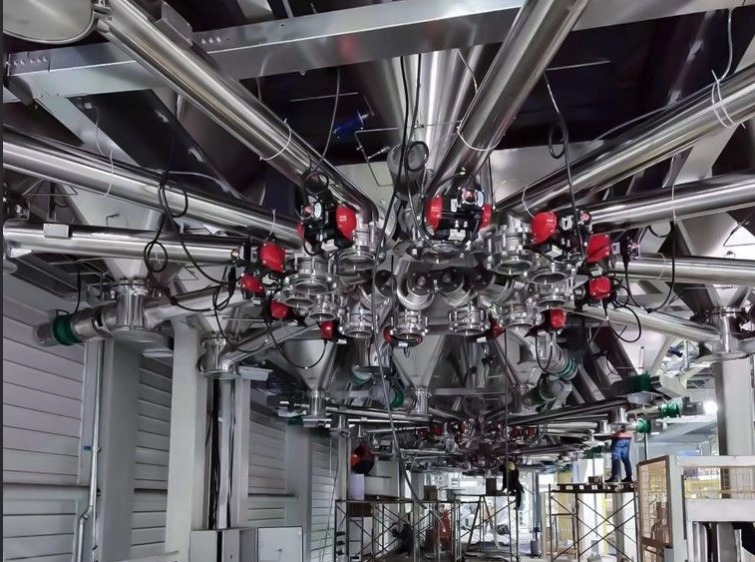
Every manufacturing facility has different material handling requirements. Powder characteristics, production capacity, pipeline layout and existing machinery all influence how a pneumatic conveying system should be configured.
Access Technology Sdn Bhd is a pneumatic conveying system supplier in Malaysia, providing customised vacuum and pressure conveying solutions for industrial production lines. Beyond equipment supply, the company supports system configuration, piping installation, automation integration, testing and technical handover to meet manufacturers’ operating requirements.
Customised Pneumatic Conveying Solutions for Manufacturing
Access Technology configures pneumatic conveying systems according to the materials being handled and the production process involved.
Its solutions include:
- Vacuum conveying systems: Negative-pressure conveying for suitable powder and bulk material applications.
- Pressure conveying systems: Positive-pressure material transfer for appropriate production requirements.
- Dilute-phase conveying: Higher-velocity transfer for compatible materials.
- Dense-phase conveying: Controlled, lower-velocity transfer for selected applications.
- Automated material handling: Integration with feeding, mixing, batching, weighing and packaging equipment.
System selection depends on material behaviour, required capacity, conveying distance and plant conditions rather than using one standard configuration for every application.
How Access Technology Configures Each Conveying System
The company reviews essential engineering requirements before recommending equipment and pipeline arrangements.
| Engineering Factor | Why It Matters |
|---|---|
| Material characteristics | Determines suitable conveying and feeding methods |
| Required capacity | Influences equipment sizing and airflow |
| Pipeline distance and bends | Affects pressure loss and material movement |
| Pick-up and discharge points | Determines system layout |
| Existing machinery | Defines equipment and control interfaces |
| Installation space | Influences piping routes and maintenance access |
Pipeline sizing is particularly important because incorrect airflow or conveying velocity can affect material transfer performance. Access Technology’s guide on selecting pneumatic conveying pipeline diameter explains how these factors influence system configuration.
Complete Pneumatic Conveying Equipment Supply
A complete system requires properly coordinated equipment rather than individual components selected independently.
Access Technology supplies:
- Vacuum pumps and pressure blowers
- Feeding equipment, valves and discharge components
- Conveying pipelines, bends and fittings
- Receivers, separators and filtration equipment
- Sensors, control panels and automation components
Equipment selection also depends on the agreed project scope and how each component connects with the production process.
For manufacturers evaluating quotations, the company’s guidance on comparing pneumatic conveying system proposals explains why equipment specifications, piping, controls, integration and technical support should be reviewed together.
Integration with Existing Production Machinery
Many factories need new conveying systems to work with existing equipment rather than replacing an entire production line.
Access Technology supports pneumatic conveying integration with existing equipment, including storage hoppers, mixers, dosing systems, weighing equipment and packaging machines.
Its integration approach considers:
- Production requirements: Identify materials, capacity and transfer points.
- Equipment compatibility: Review upstream and downstream machinery.
- Control integration: Coordinate sensors, valves, operating signals and machine sequences.
- System installation: Connect piping and mechanical equipment.
- Testing and adjustment: Evaluate conveying performance under operating conditions.
This process helps coordinate material transfer with connected manufacturing operations.
Pneumatic Conveying Applications Across Industries
Access Technology supports material handling requirements across different industrial sectors in Malaysia.
| Manufacturing Industry | Typical Material Handling Applications |
|---|---|
| Food and beverage | Powder ingredients, grains and bulk materials |
| Chemical processing | Chemical powders, pigments and granules |
| Pharmaceutical | Suitable ingredients and powder transfer |
| Plastics manufacturing | Resin, plastic pellets and regrind |
| Lithium battery | Battery material conveying and batching |
| General manufacturing | Bulk material transfer and packaging |
Material compatibility, hygiene requirements, dust control and operating conditions must be assessed before selecting a final system.
Professional Installation and Engineering Support
Access Technology’s capabilities extend beyond equipment supply to practical engineering and site execution.
As part of its pneumatic conveying installation services in Malaysia, the company performs on-site piping installation, mechanical installation, system testing, operating adjustment and technical handover according to the agreed project scope.
Its wider engineering and technical services also cover equipment maintenance, repair, automation consultation and troubleshooting support.
Combining equipment supply with engineering capabilities allows manufacturers to coordinate system specifications, physical installation and machinery interfaces within a defined project arrangement.
Why Access Technology Is an Engineering-Oriented Supplier
Access Technology approaches pneumatic conveying projects by evaluating the complete production requirement rather than focusing only on equipment specifications.
Its supplier capabilities combine three important areas:
- Application-based configuration: Selecting conveying methods and components according to material properties and operating requirements.
- Production compatibility: Coordinating conveying equipment with existing machinery and automation systems.
- Practical technical support: Supporting installation, testing, adjustments and handover within the agreed project scope.
This gives manufacturers a clearer technical basis for evaluating customised pneumatic conveying systems and their long-term operational requirements.
Conclusion
Customised pneumatic conveying systems require suitable equipment selection, pipeline configuration and integration with manufacturing processes. Matching these elements to material characteristics and production requirements is essential for reliable material transfer.
Access Technology Sdn Bhd combines pneumatic conveying equipment supply with engineering, installation and automation integration capabilities, supporting Malaysian manufacturers with application-specific material handling solutions.