
Secureworld Makes Building Security Easier to Plan as One System
A camera at the front door, a card reader upstairs and a barrier at the driveway all affect how a property works each day. Secureworld Security & Automation Sdn Bhd (SSA) supplies, installs and maintains these security and automation systems for residential and commercial customers in Kuala Lumpur and Selangor. Its range lets a customer discuss surveillance, access permissions, alarms and entrances together. For a business arranging a commercial security project, interested customers can reach SSA through its contact page.
Start at the entrance: who arrives, and how do they get in?
At a condominium or workplace, the vehicle lane has to accommodate familiar drivers and occasional visitors. SSA’s vehicle entrance equipment includes ANPR and RFID options. When planning a barrier-gate system, management should settle how each type of vehicle is identified and who handles an exception before choosing the gate itself.
ANPR identifies a registered plate; RFID identifies an issued card or tag. A JMB weighing ANPR against RFID therefore needs to consider how resident records and visitor access will be managed. A separate condominium vehicle-access explanation also highlights the effect of lane conditions and day-to-day administration on that choice.
For a credential-based arrangement, the listed UHF card reader supports long-distance reading with Ethernet and Wiegand interfaces. The dual-band UHF card is a separate credential option. Reader and card compatibility should be confirmed with the intended control system before they become part of a proposal.
If plates will control entry, the camera has to see them at the actual approach point. SSA’s ANPR installation scope considers the entrance layout, barrier and access permissions. Its managed vehicle-entry solution connects recognition with the property’s gate rules, rather than relying on a camera image alone.
Before approving an ANPR quotation, management should ask how the system will handle poor lighting, visitors and plates it cannot read. Those points, together with testing and installation scope, are part of a practical ANPR installation plan. Where a barrier is already installed, an existing-gate assessment can establish whether its controller, condition and safety arrangement suit a retrofit.
The listed DS-TCG406-E camera has relay output for barrier control and a Wiegand interface. SSA also lists a Dahua ANPR model with plate and vehicle recognition features. Both still need to be evaluated against the chosen lane and system design.
Another listed option, the DS-TCG205-E ANPR camera, supports barrier control and a motorised lens. For the complete entrance, SSA’s barrier-and-ANPR integration brings the camera interface, access decision and physical gate operation into the same discussion.
Vehicle detection deserves its own check. The signal that requests an opening and the sensor that protects an occupied lane are different functions in a barrier-gate detection plan. SSA’s barrier-gate scope also covers installation and ongoing support, which matters when an entrance is used throughout the working day.
If a barrier starts stopping unpredictably, the cause might be in the reader, controller, power, sensor or moving arm. A repair assessment should identify the failing part while the site keeps people and vehicles clear of an unsafe lane. At a condominium, this entrance should also fit the wider CCTV, pedestrian access and gate arrangement.
Then consider the doors people use every day
Inside a building, permissions vary by door and by person. SSA’s access-control range includes terminals, smart locks, biometric devices and lift equipment. A card-and-PIN terminal, for example, offers two authentication methods for a suitable controlled doorway.
A glass door may call for different hardware. The listed hybrid-verification glass-door lock offers fingerprint, card, password and remote-control access without hole drilling as a listed feature. For selected business entry points, SSA also supplies face-recognition systems; the door arrangement and the organisation’s permission rules still guide the choice.
A fingerprint-and-RFID reader can work with compatible controllers where both credentials are wanted. The listed USB fingerprint recorder serves enrolment instead of acting as the door reader itself. Keeping those roles clear helps a customer ask for a complete working setup.
Lift access adds another layer: a visitor allowed into a lobby may still need access to only certain floors. SSA provides lift access installation for projects where floor permissions are required. The EC10 panel controls up to ten floors and supports card, fingerprint and password methods.
For a larger floor arrangement, a compatible EX16 board adds floor-control capacity to the EC10 system. Once doors and floors are operating, administrators still need to manage changes: an employee access routine should update permissions as people join, change roles or leave.
Choose camera views that answer real questions
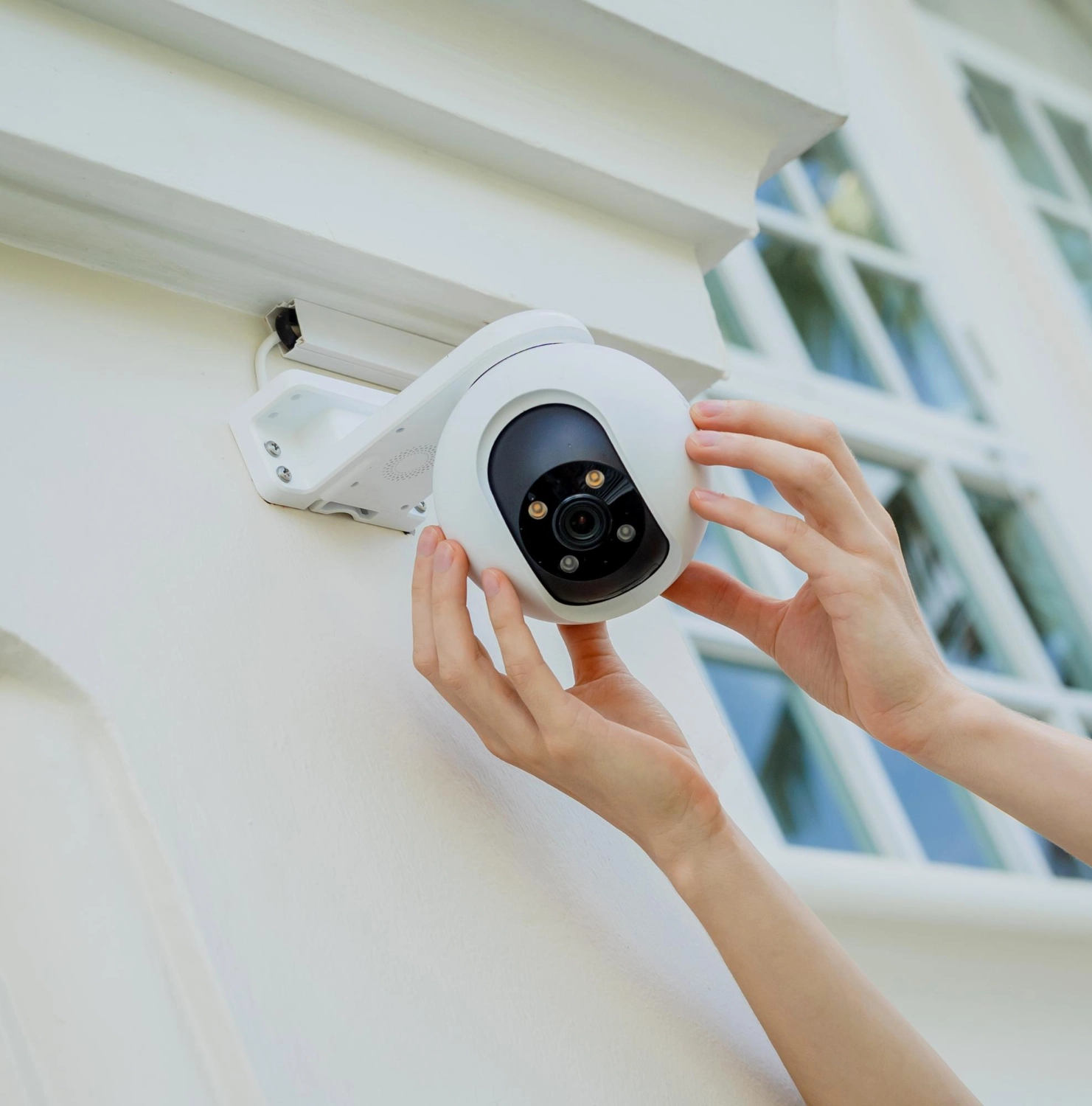
What would management need to see after an incident: the person entering, activity at a cashier, or a vehicle at the loading bay? SSA’s CCTV range includes IP and Analog HD systems, while its factory installation service covers equipment, installation and support. The useful camera position depends on the activity being reviewed.
In a shoplot, shelves and displays can block a wide view. A shop camera plan should examine the entrance, cashier, aisles and any rear door before deciding the number of cameras. At a condominium, a JMB common-area plan should also settle who can retrieve footage and what the management team receives at handover.
Hospitals have additional internal decisions about approved camera positions and who may access recordings. Those requirements belong in a hospital CCTV scope alongside testing and handover. Whatever the property type, recording storage must reflect the camera count, bitrate, recording mode and desired retention period.
Replacing an older factory system does not always mean replacing every cable. An upgrade review can assess existing coaxial infrastructure against new IP camera positions. At a night loading bay, after-dark coverage needs to account for headlights, illumination and the specific event the factory wants on record.
SSA lists a 5MP HDCVI bullet camera with smart IR for an Analog HD design. Its 5MP dual-light network PT camera adds active sound and light features and two-way talk where those functions suit the operating plan.
The listed 2MP full-colour PT camera is another network option with dual-light recording and two-way talk. Model features can inform a shortlist, while placement, cabling and recording settings determine how useful the finished view will be.
Make alarms manageable after installation
SSA’s alarm range covers wired and wireless equipment. Before a shop or office chooses devices, its intrusion plan should identify what needs detection, who arms the system and who responds to an alert.
For a property still under renovation, cable routes may be planned before finishes close. In an already finished space, wireless devices may reduce new cabling where they meet the system requirements, though battery maintenance remains part of ownership. If an installed alarm activates too often, false-alarm checks can examine sensor position, heat, doors and windows before major changes are proposed.
A wireless door-or-window detector addresses opening events at a selected point. A portable emergency button serves a different purpose: it lets a user initiate an alert, subject to how the compatible alarm system is configured.
A compatible hybrid panel can gain wireless-device capability through the listed Tri-X receiver. For a wired setup, the sounder and LED indication can make an alarm event noticeable at the premises.
The listed wired acoustic glass-break detector addresses another detection point. It should be positioned for the room and assessed with the rest of the alarm design, rather than assumed to cover every opening by itself.
Remember the wiring and the moving entrance
Devices need a practical way to connect and be maintained. SSA’s security cabling work is tied to CCTV and access-control projects, including terminations and port labels. Its broader ELV planning starts by identifying the security connections required; a separate enterprise data network should be scoped distinctly.
When a technician later traces a faulty camera or door point, a device-to-port record can save guesswork. This attention to handover is one reason to discuss the full project with a security contractor whose scope includes installation and maintenance.
Physical entrances deserve the same care. SSA’s automatic gate and door range covers entrance automation equipment. For a commercial doorway, its automatic-door service considers sensors, wiring, door construction and relevant access-control connections together.
Before accepting a quote, a customer should confirm which door materials, activation devices, safety devices and installation tasks are included in the automatic-door scope. For an existing manual gate, gate weight, hinges or tracks and power supply should be checked before an autogate motor is chosen.
A useful next step: Property owners and managers can ask SSA about their premises and the entrance, camera or access issue they want to solve. That gives the team a starting point for discussing equipment and an appropriate quotation.