
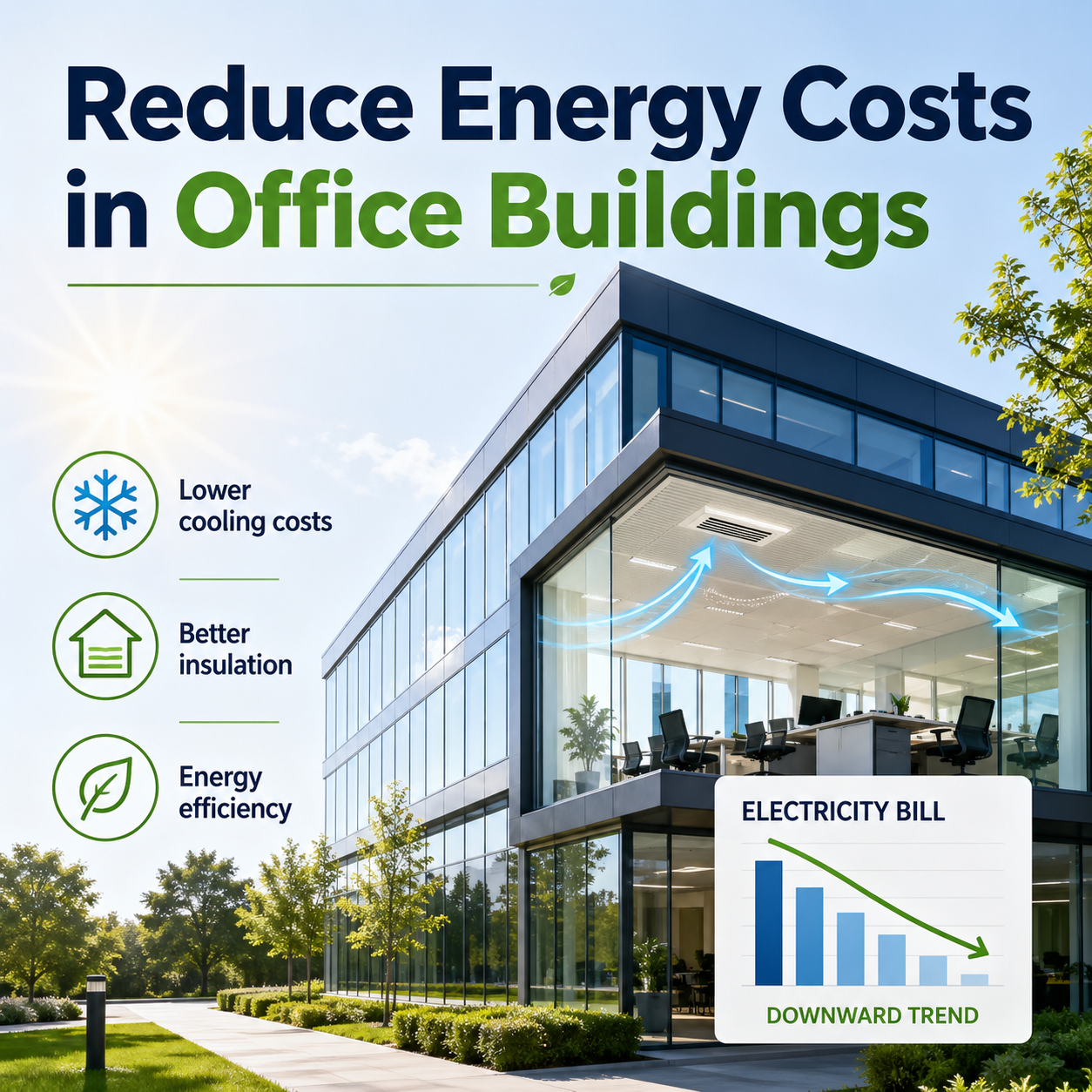
Many office buildings waste energy every day—not because of outdated systems, but because heat, light, and usage are poorly managed. The result is higher electricity bills without better comfort.
In many office buildings, a significant portion of cooling energy is lost through glass surfaces, especially in sun-exposed areas. Managing this heat gain is often more effective than upgrading entire cooling systems.
Instead of investing in expensive renovations, modern offices are focusing on small, strategic improvements that deliver measurable savings while maintaining productivity and comfort.
Upgrade Windows to Reduce Heat Gain
Windows are one of the main sources of heat entering an office. When sunlight passes through untreated glass, indoor temperatures rise, increasing the workload on air-conditioning systems.
Simple retrofit solutions like window film or smart film can:
- Block solar heat and UV rays
- Reduce glare on screens
- Lower overall cooling demand
Because these solutions can be applied to existing glass, they require no major structural changes. Offices can improve performance without interrupting daily operations.
For a deeper understanding, this guide on how window tint reduces energy cost for office buildings explains how managing heat at the window level directly impacts electricity usage.
Optimize Air-Conditioning Usage Instead of Replacing It
Air-conditioning systems are essential, but inefficiency often comes from usage rather than equipment.
Simple adjustments can lead to noticeable savings:
- Set thermostats between 24–26°C
- Clean filters regularly to maintain airflow
- Use fans to improve air circulation
These small changes reduce strain on cooling systems and improve overall efficiency without requiring replacement.
Switch to LED Lighting for Immediate Savings
Lighting is a major contributor to energy consumption in office environments. Traditional lighting systems not only use more electricity but also generate additional heat.
Switching to LED lighting offers:
- Up to 70–80% lower energy usage
- Reduced heat output, easing cooling demand
- Longer lifespan, lowering maintenance costs
This is one of the fastest upgrades with immediate cost benefits.
Use Smart Controls and Automation
Energy waste often happens when systems run unnecessarily. Smart controls help reduce this by adjusting usage based on real-time needs.
Common solutions include:
- Motion sensors that turn off lights in unused rooms
- Timers that control lighting and cooling schedules
- Smart systems that respond to occupancy patterns
These upgrades require minimal investment but can significantly reduce long-term energy waste.
Improve Layout and Maximize Natural Light
Office layout can directly influence energy consumption. By using space more efficiently, businesses can reduce dependence on artificial lighting and cooling.
Effective strategies include:
- Placing workstations near natural light sources
- Using glass partitions instead of solid walls
- Maximizing daylight during working hours
This approach aligns with modern office design while improving energy efficiency.
Encourage Energy-Saving Habits
Daily behavior also plays an important role in overall energy usage.
Simple habits include:
- Turning off unused equipment
- Enabling sleep mode on computers
- Avoiding overcooling meeting rooms
When implemented across an entire office, these actions create consistent and measurable savings.
A Smarter Approach to Energy Efficiency
Reducing energy costs in office buildings does not require major capital investment. Instead, it comes from improving how energy is used and managed.
This approach—commonly recommended in energy-efficient building design—focuses on reducing heat gain, optimizing systems, and eliminating waste rather than increasing capacity. For offices seeking long-term improvements, solutions like window tinting for office buildings can help reduce heat gain and improve energy efficiency over time without major changes.