
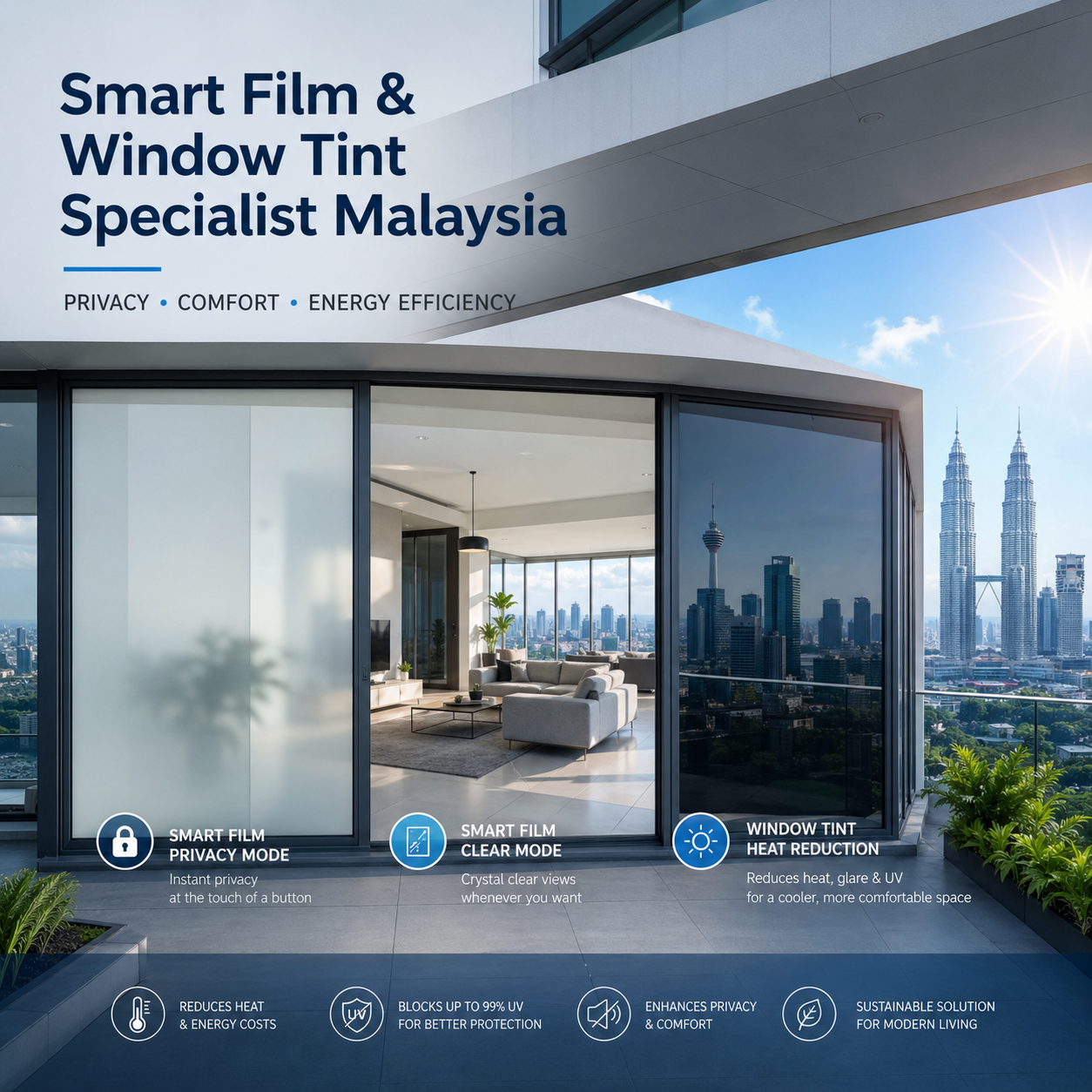
Choosing the wrong smart film or window tint specialist can lead to poor heat reduction, weak privacy performance, and costly reinstallation. In Malaysia’s hot and humid climate, getting this decision right is critical.
Glass plays a major role in indoor comfort, affecting temperature, glare, privacy, and energy usage. Yet many homes and offices still rely on basic solutions that fail to solve these issues effectively. This is why selecting the right specialist is not just a technical decision—it directly impacts long-term comfort and cost efficiency.
Why Choosing the Right Specialist Matters
Smart film and window tint are not just products—they are technical systems that require proper installation and understanding of real-world conditions.
A poorly installed film can lead to bubbling, weak performance, electrical issues (for smart film), or reduced lifespan. On the other hand, a skilled specialist ensures that the solution works as intended, delivering privacy, heat control, and durability over time.
What to Look for in a Smart Film Specialist
Smart film, especially PDLC (switchable glass film), requires a higher level of expertise compared to standard window tinting.
Key factors to consider include:
Experience with PDLC Systems
A qualified installer should have proven experience working with smart film technology, including wiring, switching mechanisms, and glass compatibility.
Clean Installation Quality
Smart film must be applied precisely to avoid haze, bubbles, or uneven finishes. Attention to detail is critical for both performance and appearance.
Electrical Integration Knowledge
Since smart film operates with power, proper wiring and safe integration are essential. A knowledgeable provider ensures reliable switching and long-term safety.
What to Look for in Window Tinting Services
Window tinting may seem straightforward, but performance varies greatly depending on film quality and installation standards.
Important factors include:
Heat Rejection Performance
Not all films block heat effectively. Look for solutions designed for tropical climates that reduce solar heat gain without overly darkening the glass.
UV Protection Rating
High-quality films should block a significant percentage of UV rays to protect interiors and improve comfort.
Installation Quality
Even the best film can fail if installed poorly. Clean edges, no bubbling, and proper alignment are signs of professional workmanship.
Smart Film vs Window Tint: Which Do You Need?
Understanding the difference between these two solutions helps in choosing the right specialist.
| Feature | Smart Film | Window Tint |
|---|---|---|
| Main Function | Privacy on demand | Heat & glare reduction |
| Operation | Switchable (clear ↔ opaque) | Fixed |
| Best For | Offices, meeting rooms, homes | Homes, offices, shopfronts |
| Energy Impact | Moderate | High (reduces cooling load) |
Smart film is ideal for spaces that require flexible privacy, while window tint is better suited for improving thermal comfort and reducing energy usage. In many cases, a combination of both provides the best overall result.
A Practical Approach to Choosing the Right Provider
When selecting a specialist, it is important to look beyond price alone. A reliable provider should:
- Recommend solutions based on actual needs, not just products
- Offer clear explanations of performance and limitations
- Have experience across residential and commercial applications
- Deliver consistent installation quality
This approach ensures that the chosen solution performs well not just immediately, but over the long term.
Final Insight
Choosing a smart film or window tint specialist is not just about upgrading glass—it is about improving how a space functions in terms of comfort, privacy, and efficiency.
For those looking for a provider with experience in both smart film and window tinting, companies like BrightSmart Sdn Bhd offer solutions across residential and commercial applications, combining technical expertise with practical, climate-focused results.