
Open-concept offices have transformed how businesses use space—but they’ve also created a new challenge: how to maintain privacy without sacrificing light and design. In cities like Kuala Lumpur and Selangor, this shift toward glass-based layouts is driving demand for smarter, more adaptable privacy solutions.
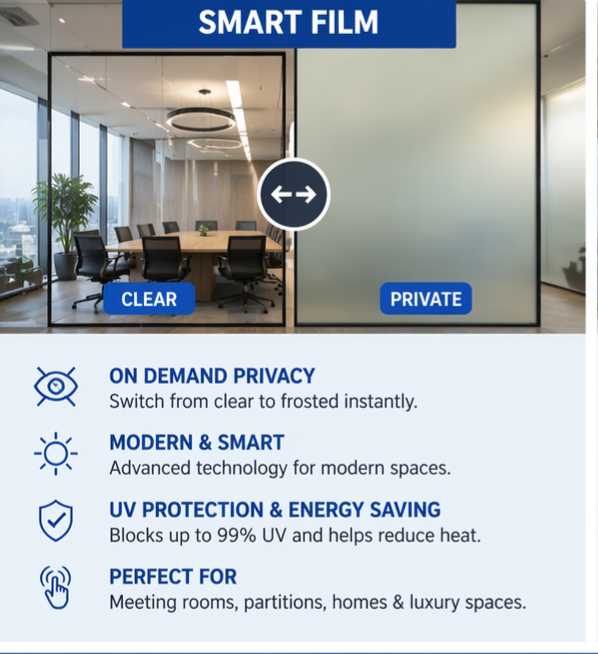
Smart glass—also known as PDLC smart film systems—is quickly emerging as a preferred alternative to traditional curtains and blinds. Rather than covering windows, it transforms them into dynamic surfaces that can switch between transparent and opaque instantly.
Instant Privacy Without Blocking Natural Light
One of the biggest drawbacks of curtains is the constant trade-off between privacy and daylight. When closed, curtains block natural light, making spaces feel darker and less inviting.
Smart glass eliminates this compromise. With a simple switch, glass panels turn opaque while still allowing light to pass through, keeping offices bright and functional.
According to workplace studies, employees working in environments with natural light report up to 15% higher productivity and improved well-being. This makes solutions that preserve daylight—while still ensuring privacy—especially valuable in modern office design.
A Cleaner, More Modern Office Aesthetic
Curtains often appear bulky and outdated, particularly in offices designed around clean lines and open spaces. They can disrupt visual consistency and make interiors feel cluttered.
Smart glass supports a minimalist, high-end aesthetic. Glass partitions remain sleek and unobstructed, aligning with contemporary workplace trends that emphasize openness, transparency, and professionalism.
Better Space Utilization for Flexible Workplaces
In compact or flexible office environments, space efficiency plays a critical role. Curtains require room for tracks, folds, and movement, which can limit layout options.
Smart glass is integrated directly into partitions, meaning it does not interfere with furniture placement or room configurations. This allows offices to feel more spacious and adaptable, especially in hybrid or multi-purpose workspaces.
Low Maintenance and Improved Hygiene
Fabric curtains tend to collect dust, odors, and allergens over time—particularly in high-traffic environments like offices, clinics, and shared spaces.
Smart glass, on the other hand, remains a glass surface:
- Easy to clean
- No fabric wear and tear
- More hygienic for professional environments
This makes it a practical, low-maintenance solution for long-term use.
More Than Privacy: A Multi-Functional Upgrade
Smart glass goes beyond simple privacy control. It introduces new ways to use office spaces more effectively.
When frosted, glass panels can function as projection screens for presentations. They also help reduce glare on monitors, block UV rays, and contribute to better energy efficiency by regulating heat and light.
For teams exploring smart film for meeting rooms, this added functionality makes smart glass a valuable upgrade rather than just a replacement.
Automation and Smart Office Integration
As offices adopt smarter technologies, manual systems like curtains are becoming less practical.
Smart glass can integrate with:
- Remote controls
- Motion sensors
- Smart office systems
- App-based automation
This aligns with the broader trend of intelligent workplaces where comfort, efficiency, and convenience are seamlessly managed.
Smart Glass vs Curtains in Offices
The shift becomes clearer when comparing both options side by side:
| Feature | Curtains | Smart Glass |
|---|---|---|
| Privacy | Manual | Instant (switchable) |
| Natural Light | Blocks light | Maintains brightness |
| Maintenance | High | Low |
| Design | Bulky | Minimalist |
| Automation | No | Yes |
This comparison highlights why more businesses are adopting smart glass solutions for offices as part of their workspace upgrades.
Why Modern Offices Are Making the Switch
Smart glass is not just replacing curtains—it is redefining how office spaces function. By combining privacy, design, and technology into a single solution, it allows workplaces to become more flexible, efficient, and visually refined.
As workplace expectations continue to evolve, smart glass is becoming more than a design trend—it is a practical solution for balancing privacy, comfort, and modern aesthetics in professional environments.